The mirror is not a measurement
A fit score is a compression of a garment, a body and a judgement into one number. It is worth asking what falls out in the compression.
There is an appealing tidiness to the fit score. One number, easy to display, easy to compare, easy to improve. It fits into an interface and into a report. It is also, as an account of what happens when a person puts on a garment, an aggressive simplification, and this column is an argument for keeping sight of what it leaves behind.
The score is a judgement wearing numeric clothes
Begin with what is being compressed. A fit outcome depends on garment dimensions, on body dimensions, on the ease the pattern was drafted with, on how the cloth behaves, on posture, on what is worn underneath, and on what the wearer wants the garment to do. A jacket that a tailor would call correctly fitted is too tight for someone who wants to layer under it and too loose for someone who wants it close. Both people are right, because fit is partly a specification and not only a fact.
A single score has to pick one specification and present it as the answer. Usually it picks the middle of the range, which serves the average intention and quietly misinforms everyone whose intention differs. The number does not read as a choice. It reads as a measurement.
The number does not read as a choice. It reads as a measurement.
What gets designed away
The second cost is to the vocabulary. A person who knows that jackets are usually tight across their shoulders and long in the sleeve knows something specific and actionable. They can look for a different cut, size for the shoulder and have the sleeve shortened, or avoid a producer whose grading does not suit them. That knowledge took years of trying garments on to accumulate and it is worth a great deal.
A score offers none of it. It says seventy-two rather than saying tight across the shoulders, and the person who follows scores for a year has learned nothing they can use anywhere else. A system that reported which dimension was the constraint, and by roughly how much, would be less tidy and would make its user more capable rather than more dependent.
In defence of the underlying work
None of this is an argument against measurement. Quite the opposite. The most useful thing these systems do is exactly the unglamorous part: recording the actual dimensions of an actual garment, in centimetres, and publishing them. Garment measurements let a person compare against a garment they already own and know the fit of, which is the most reliable fit test that exists and requires no model at all.
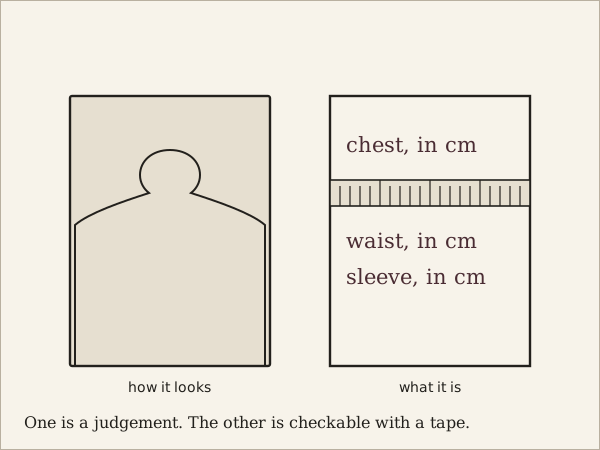
The measurement is the durable contribution. It stays true when the interface is redesigned, it is checkable with a tape, and it transfers to any garment from any producer. The score sits on top of it, adds a judgement, and hides the thing it was computed from.
What a good system would show
Show the numbers. Show the garment's flat measurements and say whether they are body or garment figures. Say which dimension is the tightest and which the loosest, and by how much. Say when the honest answer is that this range does not have a size drafted for this body, because that sentence is true often and is almost never said.
And keep the picture and the measurement apart, so that a convincing image is not mistaken for a fitting. The mirror shows how something looks. The tape says what it is. A system that confuses the two has not made clothing easier; it has made the confusion faster.